
Unmanned Aerial Vehicle Countermeasures SystemThis is a technology used to detect, track, and interfere with drones in order to counter the security threats they may pose. The following are common functions of drone countermeasure systems.
Functions and characteristics:
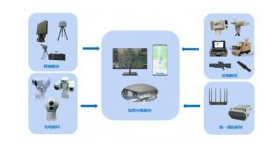
Detection and Identification: The primary task of a drone countermeasure system is to detect and identify aerial drones. Utilizing technologies such as radar, optical sensors, and infrared sensors, the system can promptly detect potential drone targets and effectively identify them, determining their type and characteristics. Real-time Monitoring and Tracking: Once a drone is detected, the countermeasure system monitors and continuously tracks its trajectory in real time. Through precise tracking, the system can provide relevant information to support subsequent decision-making and intervention measures.
Spectrum Analysis and Signal Jamming: Drones typically use wireless communication for control. Drone countermeasures systems can perform spectrum analysis to identify the drone's communication frequency bands and employ signal jamming techniques to interfere with or sever the communication link between the drone and the operator. Electromagnetic Interference and Navigation Interference: Through technologies such as electromagnetic pulses and GPS jamming, the system can effectively block the drone's navigation system, causing it to lose positioning information or mislead its flight path, thereby controlling the drone's range of movement.
Optical and photoelectric interference: To counter the visual system of drones, drone countermeasures can employ optical and photoelectric interference methods, such as laser beam interference and flash light interference, to reduce the drone's visual recognition and navigation capabilities.
Non-destructive jamming and destruction: Some advanced drone countermeasures systems possess both non-destructive jamming and destruction capabilities. Non-destructive jamming typically includes signal interference and navigation disruption, while destruction can damage the drone's electronic equipment or airframe using high-power microwaves, laser weapons, etc. Automated decision-making systems: Some drone countermeasures systems are equipped with automated decision-making systems that can autonomously make decisions and execute corresponding countermeasures based on detected drone information, reducing the time delay of human intervention.
Data recording and analysis: The system usually has data recording and analysis functions, which can record the detected drone information, analyze the drone's flight patterns and behavior, and provide data support for subsequent safety analysis.
Regulatory Compliance: Drone countermeasure systems must comply with relevant laws and regulations to ensure that their operation does not unduly interfere with the surrounding environment or legally flying drones. In summary, drone countermeasure systems utilize a variety of technologies, from detection and tracking to interference, to comprehensively address the potential threats posed by drones and safeguard airspace safety and stability.