With the rapid development of drone technology, effective drone detection has become a crucial issue in public safety. Drone detection radar, utilizing the principle of radar signal reflection, monitors drone flight trajectories in real time and has become a key device for protecting airspace security. Radar can effectively detect low-flying drones and provide precise location information, making it the preferred low-altitude security detection tool for airports, key industrial parks, government facilities, and other areas.
1. Working principle of UAV detection radar
Drone detection radar detects drones by emitting electromagnetic waves and receiving signals reflected back from aerial targets. Based on the intensity, delay, and frequency shift of the echo signals, the radar can calculate the target object's distance, altitude, speed, and flight direction. This principle is widely used to detect drone intrusions, especially when drones are small and fly at low altitudes, where the radar can provide precise detection data.。
advantageIt operates around the clock and is capable of detecting drones at long distances and high altitudes.
shortcomingThe detection effect of small, low-speed flying drones is sometimes limited and may be affected by factors such as terrain and weather.
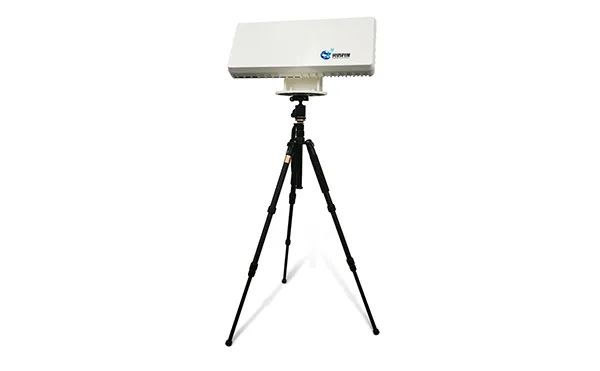
2. Parameters of general-purpose UAV radar detection equipment
Common drone detection radar equipment on the market comes in various models and specifications. Below are some common technical parameters:
| Equipment Name | Detection range | Detection altitude | Detection angle | Frequency band range | refresh rate | Power consumption |
|---|
| UAV detection radar A | 5 km | 0-2000 m | 360° all-round | 1-6 GHz | 2 seconds/time | 200 W |
| Unmanned Aerial Vehicle Radar Detection System B | 3 km | 0-1500 m | 120° | 2-8 GHz | 1 second/time | 250 W |
| UAV low-altitude radar C | 7 km | 0-3000 m | 180° | 3-6 GHz | 3 seconds/time | 300 W |
| Integrated radar for UAV detection D | 10 km | 0-5000 m | 360° all-round | 1-10 GHz | 1.5 seconds/time | 350 W |
These parameters help users select appropriate drone detection radar equipment based on their needs for detection range, sensitivity, and power consumption. Detection distance and detection altitude are important indicators, especially for wide-area surveillance, where choosing equipment with a large detection range is crucial.
3. Application Scenarios of UAV Detection Radar
Unmanned aerial vehicle (UAV) detection radar is widely used in various scenarios requiring airspace security monitoring:
Airport securityTo prevent drones from illegally entering airport airspace and to ensure the safety of aircraft takeoffs and landings.
Key Industrial ParksProtect military facilities from reconnaissance and attacks by enemy drones.
government agenciesTo ensure the security of critical government facilities and prevent drones from acquiring sensitive information.
Large public eventsIn situations where people gather, such as sporting events and concerts, radar systems can quickly detect drones and take timely early warning and response measures.
in conclusion
As a core component of drone defense systems, drone detection radar provides accurate and efficient drone detection capabilities. By understanding the technical parameters and application scenarios of radar equipment, users can select the most suitable equipment based on their actual needs to ensure airspace security.